
The Invisible Cost of Winter Pavement Safety
Winter maintenance is a life-safety operation first. Walkways, loading areas, parking decks, ramps, and public roads must remain usable when freezing precipitation creates slip hazards. Yet the same treatment that restores traction can accelerate deterioration in concrete, steel, drainage systems, soils, turf, and trees. The operational challenge is not whether to manage ice, but how to deliver a predictable level of service without treating every storm as a reason for unrestricted dry salt application.
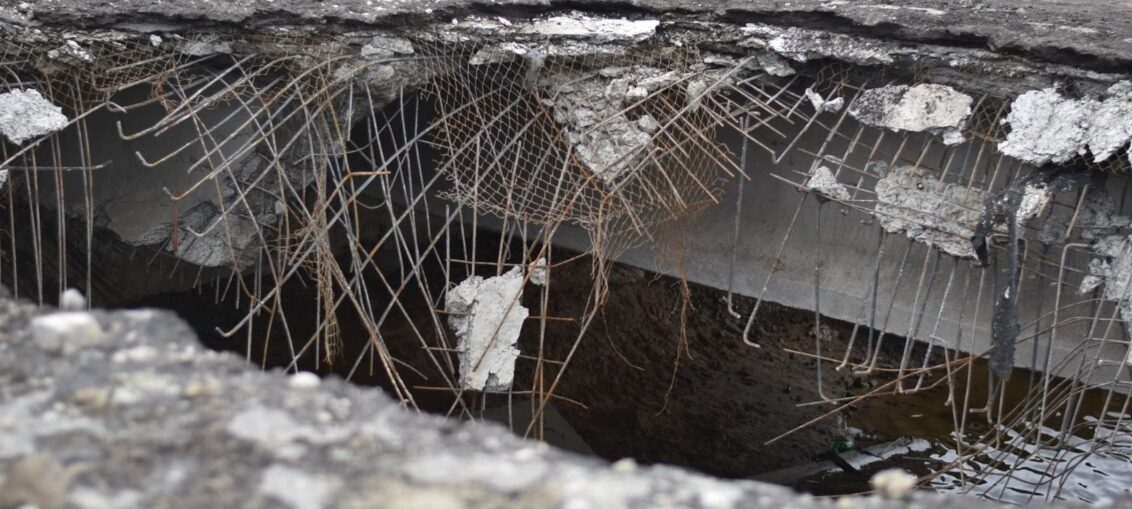
Under slush and meltwater, damage can progress below the visible surface. Brine enters pores and cracks, concrete becomes repeatedly saturated, and freeze-thaw cycles generate internal pressure. Runoff carries soluble salts into planting beds, where sodium alters soil structure and chloride interferes with root water uptake. A defensible programme therefore moves beyond simple salt reduction. It combines weather monitoring, engineered anti-icing chemistry, calibrated equipment, targeted barriers, realistic clearance standards, and planned soil restoration.
Mechanisms of Concrete Distress and Freeze-Thaw Saturation
De-icers do not remove ice by magic. They dissolve into water, create a brine with a lower freezing point, and penetrate the interface between ice and pavement. That process improves safety, but it can also increase the amount of liquid held at the concrete surface. Water and brine enter capillaries, paste pores, construction joints, hairline cracks, and poorly consolidated areas. When temperatures fall again, freezing water expands. The resulting hydraulic pressure pushes against the surrounding cement paste and aggregate.
Osmotic effects can add to this mechanical stress. Differences in dissolved-salt concentration encourage movement of water through the pore system, producing localised pressure as ice forms in some areas while concentrated brine remains liquid in others. Repeated cycles gradually weaken the surface. Scaling is the visible result when thin flakes or layers of mortar detach, but the underlying process may also enlarge cracks and expose aggregate. De-icers can contribute to chemical deterioration as well, particularly when repeated wetting, drying, concentration changes, and corrosion of embedded steel occur together. This is distinct from ordinary freeze-thaw scaling, although both mechanisms commonly overlap.
Concrete is especially vulnerable during its first winter or whenever its original design and curing were inadequate. Young concrete may not have developed sufficient strength, while improperly air-entrained concrete lacks the microscopic air voids that provide relief for freezing water. Excess water added during placement, premature finishing, poor curing, and weak surface paste further increase risk. Exterior concrete exposed to continuous moisture and de-icing commonly requires a higher design strength and durable air-void system than protected interior work. Facility teams should treat recently installed slabs, architectural finishes, decorative concrete, and surfaces with uncertain specifications as high-risk areas.
- Hydraulic pressure develops as water freezes and expands inside restricted pores.
- Osmotic pressure results from concentration differences between brine and pore water.
- Scaling removes surface mortar through repeated saturation and freeze-thaw exposure.
- Early-age concrete is more susceptible when curing, strength, or air entrainment is inadequate.
Chemical Profiles and Field Thresholds of Common Compounds
De-icer selection should begin with the operating temperature, pavement condition, application equipment, drainage pattern, and surrounding materials. Sodium chloride is widely available and economical, but its performance declines as temperatures approach its practical low-temperature range. It also depends heavily on moisture to form brine and may act slowly on very cold, dry pavement. Calcium chloride and magnesium chloride attract moisture and can release heat as they dissolve, allowing them to begin working more readily in colder conditions. Their higher unit cost can be offset when lower application rates, faster penetration, or reduced repeat applications are demonstrated in field practice.
Calcium magnesium acetate is generally selected where reduced chloride loading and lower corrosion potential justify its substantially higher material cost. It is not a universal replacement for chloride salts, particularly across large road networks or during prolonged severe storms. Laboratory eutectic points are useful for comparison, but they should not be mistaken for guaranteed field performance. Wind, pavement temperature, residual moisture, traffic, concentration, dilution, and the presence of compacted snow all affect results.
| Compound | Typical operating profile | Approximate eutectic point | Primary field considerations |
|---|---|---|---|
| Sodium chloride | Reliable in moderate cold when moisture is available | About -21°C, or -6°F | Low cost, but slower and less effective at extreme cold; chloride and corrosion exposure remain significant |
| Calcium chloride | Works at lower temperatures and attracts moisture | About -51°C, or -60°F | Fast brine formation and strong cold-weather performance; can still damage vegetation, metals, and concrete when over-applied |
| Magnesium chloride | Useful in cold conditions, with performance shaped by concentration | About -33°C, or -28°F | May lose rate of melt in severe cold, crystallise in equipment, and create substantial chloride and corrosion concerns |
| Calcium magnesium acetate | Alternative where corrosion and chloride reduction are priorities | About -28°C, or -18°F | Lower chloride burden, but high purchase cost; while its laboratory eutectic point is near -28°C (-18°F), its practical effective melting threshold in the field is significantly higher (typically around -7°C, or 20°F) |
Traditional rock salt remains useful when conditions fit its operating range and application is controlled. It becomes a poor choice when crews spread it automatically on pavement that is too cold to generate an effective brine. In those circumstances, excess material may remain as crystals, migrate with runoff, or be pushed into landscape edges without delivering a proportional safety benefit. A blended strategy can be more effective: use mechanical removal first, select chemistry for the pavement temperature, and reserve more capable compounds for ramps, shaded areas, bridges, and other priority hazards.
Proactive Anti-Icing Protocols and Operational Standards
Post-storm de-icing is reactive. Crews wait for snow or freezing rain to bond to the pavement, then apply material to break an established interface. Anti-icing is preventive. A properly diluted liquid brine is placed before precipitation or freezing begins, reducing the bond between ice and pavement so ploughs and brushes can remove it more efficiently. The objective is not to keep every surface dry throughout a storm. It is to make removal easier, improve traction sooner, and reduce the amount of solid material needed after accumulation occurs.
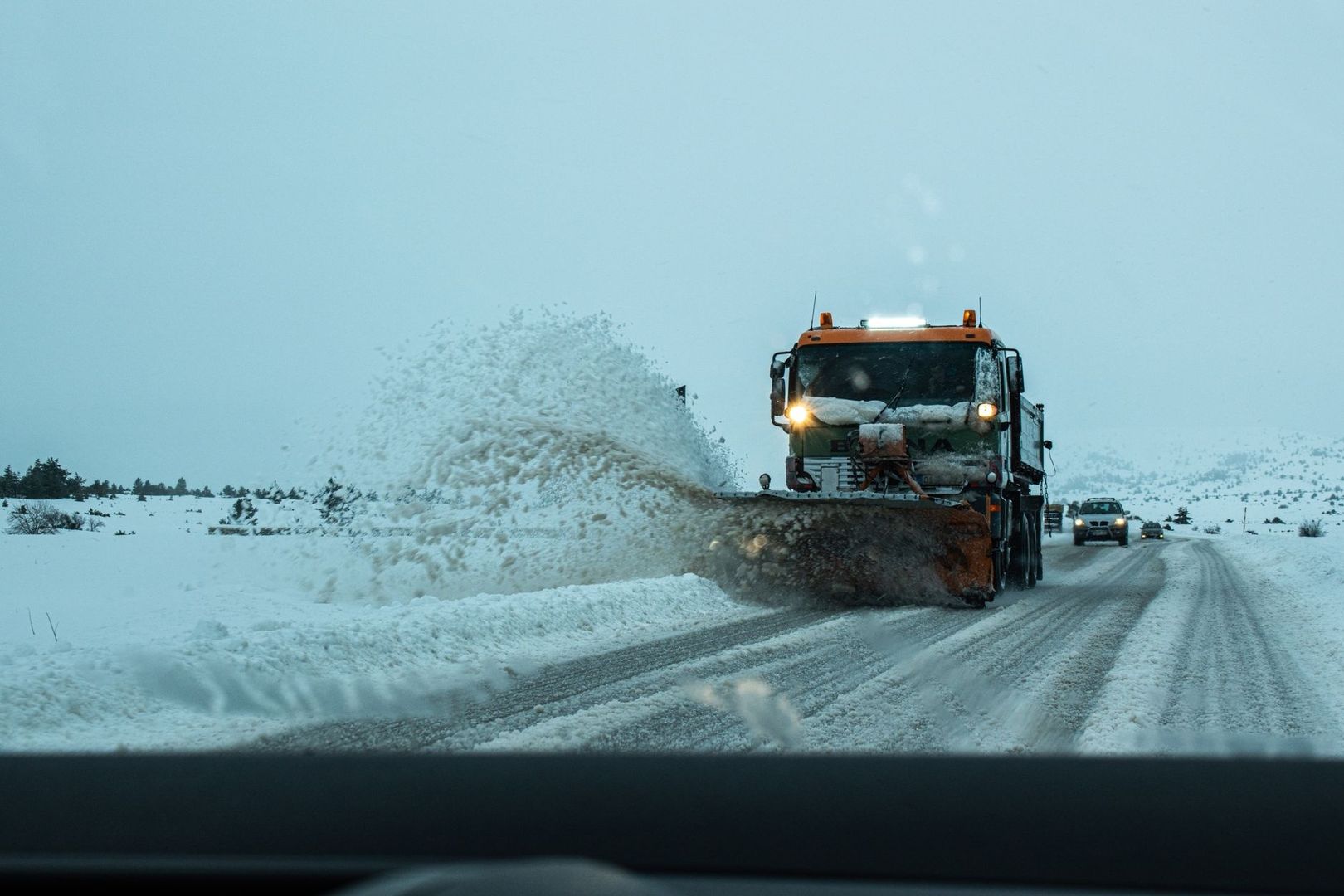
Application rates must be calibrated rather than estimated by visual coverage. If a facility normally applies 20 units of dry salt to a route after bonding has occurred, preventing that bond may allow the same service objective with a materially lower quantity, often reducing total salt use by roughly 20 to 40 percent when weather timing, concentration, and equipment are properly controlled. The exact reduction depends on storm intensity, pavement temperature, traffic, liquid concentration, and whether ploughing begins at the right time. Crews should verify rates with spreader calibration, measured tank output, route logs, and post-event inspection rather than relying on a claimed percentage.
Service expectations should also be realistic. Vermont”s Snow and Ice Control FAQ describes a safe-roads-at-safe-speeds approach, prioritising routes and restoring bare pavement according to corridor importance rather than promising bare pavement throughout every storm. Facility managers can use that principle when defining defensible response levels for entrances, emergency access routes, accessible paths, and lower-priority parking areas. A written standard should identify priority zones, inspection intervals, escalation triggers, and the point at which weather conditions require users to adjust expectations.
- Monitor pavement temperature, forecast precipitation, and surface moisture before treatment.
- Apply liquid anti-icing material early enough to prevent bonding, while avoiding application before rain that would dilute or wash it away.
- Plough or brush promptly, then apply targeted solid de-icer only where residual bonding or refreezing creates a documented hazard.
- Calibrate spreaders and sprayers, record material use by route, and inspect results against the defined service level.
Subsurface Soil Toxicity and Root Zone Disruption
Salt damage often begins at the pavement edge, where ploughed snow, splash, spray, and runoff concentrate contaminants. Sodium in sodium chloride can displace calcium and magnesium on clay and organic matter surfaces. As exchangeable sodium rises, soil particles disperse rather than forming stable aggregates. The result is poorer infiltration, reduced aeration, surface sealing, and greater resistance to root penetration. High clay content and compacted construction soils make the problem worse because they restrict the drainage needed to move soluble salts below the active root zone.
Chloride creates a separate plant stress. As chloride accumulates in upper soil layers, roots encounter a solution with greater osmotic pressure. Water may be present, but plants must expend more energy to absorb it, producing a form of physiological drought. Chloride uptake can injure foliage, while sodium and chloride together disrupt nutrient balance, photosynthesis, and root function. Symptoms may include browning evergreens, marginal leaf scorch, reduced shoot growth, dieback, or distorted branching. Injury can occur through contaminated soil and through salt spray, and it may be mistaken for drought, disease, compaction, or winter desiccation.
Risk depends on site design as much as on total material applied. Narrow raised medians, kerb-line planting beds, low planters, and areas receiving direct plough storage can accumulate far more salt than broad, well-drained areas set back from traffic. The University of Wisconsin Extension”s guidance on Reducing Deicing Salt Damage This Winter emphasises limiting applications, removing snow before salting, managing snow-pile locations, and using barriers or more tolerant planting where appropriate. A practical audit should map runoff, splash direction, drainage outlets, snow storage, and the distance from treated pavement to sensitive root plates.
- Inspect kerb-line soil for crusting, poor infiltration, elevated electrical conductivity, and weak plant growth.
- Identify trees and shrubs within roughly 30 feet of treated roads, driveways, and parking areas as potential high-risk assets.
- Separate direct application zones from areas affected by spray, runoff, or ploughed snow.
- Use soil and plant tissue testing when salt injury is uncertain or when remediation budgets require documented prioritisation.
Engineering Remediation with Mechanical Barriers and Gypsum Flushes
Prevention is usually cheaper than restoration. Snow should not be stored against tree trunks, root flares, planting beds, or porous soils that drain towards sensitive vegetation. Low deflectors, kerb modifications, temporary hessian screens, snow fencing, and geotextile berms can redirect spray and snow away from root plates. These measures do not eliminate airborne salt, but they reduce the concentrated loading created by ploughing and direct runoff. Barrier placement should preserve sight lines, pedestrian access, emergency routes, and drainage capacity.
Gypsum, or calcium sulphate dihydrate, can assist where sodium has degraded clay soil structure. Calcium supplied by gypsum may displace exchangeable sodium from clay colloids, allowing sodium to leave in drainage water. It is not a neutralising agent, and it cannot solve a drainage problem by itself. Application should be based on soil testing, texture, sodium status, and the depth of the affected layer. Pelletised agricultural gypsum is easier to distribute accurately than loose powder, but the correct rate still depends on site conditions. Applying more material without adequate water movement can increase cost without improving the root zone.
Spring remediation should pair amendments with controlled deep watering. Once snowmelt and rainfall patterns permit, repeated irrigation can move soluble chlorides below active turf and shallow-rooted plant horizons, provided the soil profile and drainage system can carry the water away. Water must not be applied so aggressively that runoff carries salt into another planting bed or stormwater feature. Managers should document pre-treatment conductivity, infiltration, amendment rate, irrigation volume, and follow-up plant response. Where soils remain compacted or poorly drained, physical renovation, improved soil volume, underdrains, or replacement may be necessary in addition to gypsum.
- Map contaminated areas and test salinity, sodium-related structure problems, pH, texture, and drainage.
- Install or reposition barriers to keep snow, splash, and concentrated runoff away from root plates.
- Calculate gypsum requirements from soil data, then distribute the material evenly through the affected soil depth.
- Deep-water in staged applications during suitable spring conditions, confirming that drainage prevents ponding and off-site migration.
Building a Defensible Year-Round Grounds Preservation Strategy
Infrastructure preservation begins with matching the compound and application method to the actual hazard. Sodium chloride remains economical for suitable temperatures and broad coverage, while calcium chloride, magnesium chloride, or CMA may have a role in targeted zones where temperature, speed, corrosion, or chloride constraints justify their use. No compound is environmentally harmless, and even premium materials can damage concrete, metals, soils, and plants when over-applied. The strongest programme combines forecast-led anti-icing, prompt mechanical removal, calibrated equipment, and documented inspection.
The financial benefit is measured over the asset life, not only in the winter materials budget. Fewer bonded events can reduce labour and salt use. Lower chloride loading can protect trees and turf from replacement costs, while better concrete exposure control can delay scaling repairs and slab renewal. A practical annual audit should include the following actions:
- Inspect and calibrate spreaders, sprayers, brine tanks, pumps, and storage systems before the season.
- Train crews to distinguish preventive liquid anti-icing from reactive post-storm de-icing.
- Set route-specific service levels for emergency access, accessible paths, vehicle lanes, and lower-priority areas.
- Map snow-storage locations, drainage paths, sensitive root zones, and concrete surfaces with known durability concerns.
- Stage barriers, gypsum, testing supplies, and irrigation equipment before spring remediation is needed.
- Review material use, pavement conditions, plant health, and repair costs after every significant winter event.